
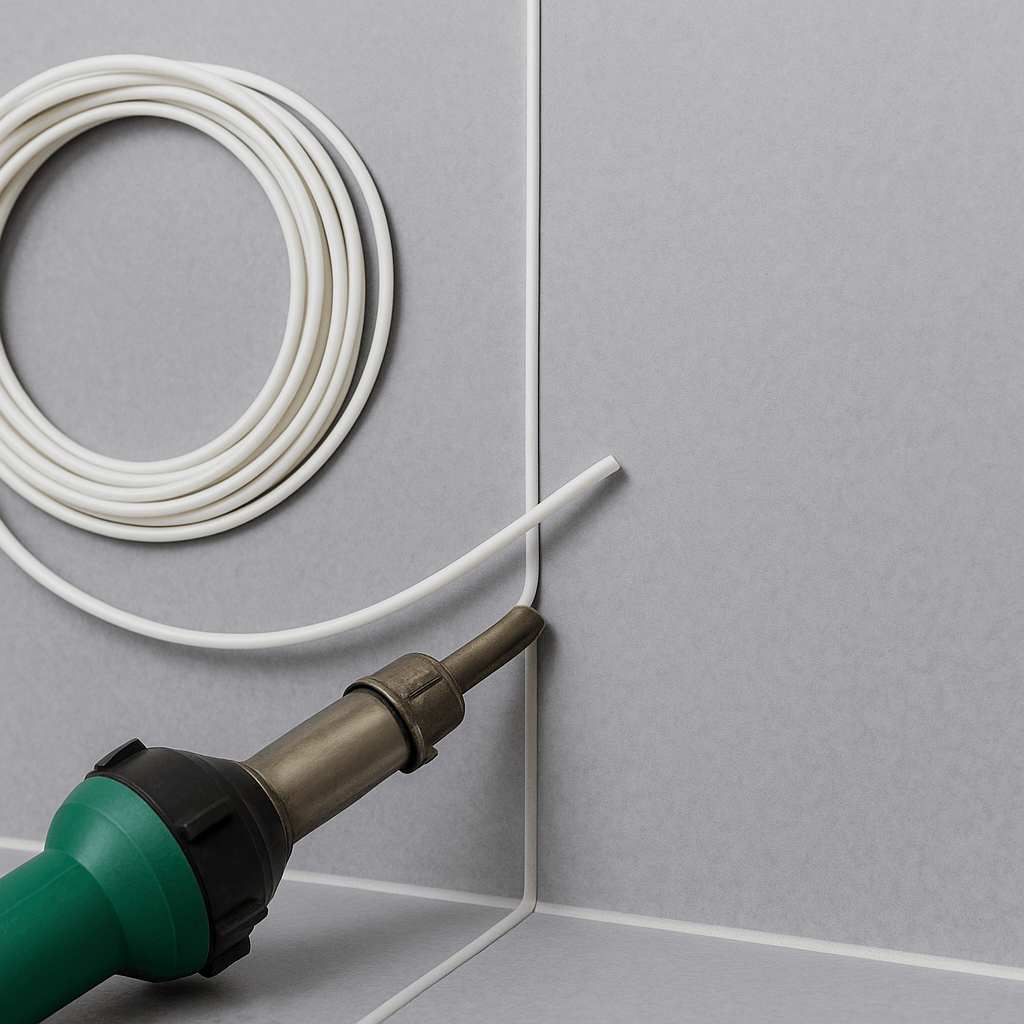
PVC welding rods are a specialist but extremely important component in high-performance hygienic wall cladding systems. They are used to create heat-welded joints between PVC panels, forming a seamless, watertight, and fully hygienic surface. In environments where hygiene standards are exceptionally strict, welded joints are often the preferred or required installation method.
Unlike mechanical joints or silicone-sealed connections, PVC welding creates a permanent fusion between panels. When applied correctly using hot air welding equipment, the welding rod melts and bonds with the panel edges, effectively becoming part of the wall surface itself. This results in a joint with no gaps, no voids, and no reliance on surface sealants.
PVC welding rods are commonly specified in healthcare facilities, laboratories, cleanrooms, pharmaceutical environments, food processing plants, and high-risk production areas. In these settings, even microscopic gaps can become contamination points, so welded joints offer the highest level of hygiene assurance.
One of the key advantages of welded joints is their long-term durability. Silicone sealants, while effective, can degrade over time due to cleaning chemicals, heat, and constant moisture exposure. Welded joints, by contrast, are resistant to chemical attack and mechanical wear, maintaining their integrity for many years when installed correctly.
PVC welding rods are available in a range of colours to match wall panels, ensuring that welded joints blend seamlessly into the finished surface. This maintains a clean, professional appearance while delivering superior hygiene performance. Colour matching is particularly important in visible or customer-facing environments where aesthetics matter alongside compliance.
Correct installation is essential when using PVC welding rods. Panels must be prepared accurately, with clean, properly routed joints to allow the welding rod to bond correctly. Hot air welding equipment is used to heat both the rod and the panel edges simultaneously, creating a controlled melt that fuses the materials together. Once cooled, excess material is trimmed to leave a smooth, flush finish.
Because of the specialist nature of welding, this installation method is typically carried out by trained installers. However, the long-term benefits often justify the additional skill and time required. Welded systems reduce maintenance needs, eliminate resealing cycles, and provide peace of mind in high-risk environments.
From a hygiene perspective, welded joints are considered one of the most effective solutions available. With no sealant lines to degrade and no gaps to harbour bacteria, cleaning becomes faster and more reliable. This is particularly valuable in facilities that undergo frequent audits, inspections, or validation processes.
At Cladding4Less, we supply PVC welding rods designed specifically for use with hygienic wall cladding panels. Our rods are compatible with PVC sheet materials used in commercial and industrial environments, helping installers achieve consistent, high-quality results.
When deciding whether to use welding rods or traditional trims and sealants, the operating environment should always guide the decision. For many commercial kitchens and general hygiene areas, sealed trims may be sufficient. For high-dependency or controlled environments, PVC welding rods provide an extra level of security that cannot be matched by sealants alone.
In short, PVC welding rods transform hygienic wall cladding into a truly seamless system — delivering maximum hygiene, durability, and confidence where it matters most.