
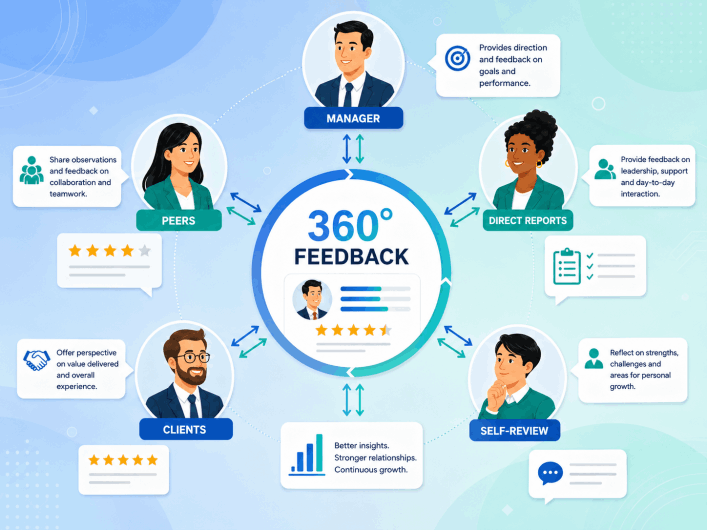
Professional development is most effective when people understand how their behaviour, communication and performance are experienced by others. While traditional reviews can provide useful information, they often rely on a single viewpoint. In many workplaces, people work with managers, colleagues, direct reports and external contacts, so broader feedback can provide a more realistic picture.
360 degree feedback is a structured approach that gathers feedback from several people who interact with an individual in different ways. This may include line managers, peers, team members, senior leaders and sometimes customers or project stakeholders. By combining these perspectives, the process helps identify strengths, development areas and patterns that may not be visible through normal performance reviews.
One of the main benefits of this approach is that it can reveal how behaviour changes across different working relationships. Someone may be confident and organised when dealing with senior leaders but less clear when communicating with colleagues. Another person may be supportive within their team but less effective at managing deadlines across departments. Multi-source feedback helps highlight these differences.
The process is often used for leadership development, but it can also support employees at different levels. It can help people understand how they contribute to teamwork, communication, problem-solving, accountability and workplace culture. This makes it useful for managers, aspiring leaders, project leads and employees who work closely with others.
A well-designed feedback process should focus on observable behaviour. Instead of asking vague questions, it should explore specific areas such as listening, collaboration, reliability, decision-making, communication, conflict handling and support for others. Specific feedback is easier to understand and easier to turn into meaningful improvement.
Confidentiality is essential if the process is going to produce honest responses. People may hesitate to provide open feedback if they believe their comments will be personally identified. Clear rules around anonymity, reporting and how feedback will be used can help respondents feel more comfortable. This usually leads to more accurate and useful information.
The feedback report should be balanced and constructive. It should not simply list weaknesses or negative comments. Good feedback highlights where the individual is already performing well, as well as where development may be helpful. Understanding strengths can be just as valuable as identifying areas for improvement, because strengths can be used more deliberately.
Interpreting the results carefully is important. A single comment should not be treated as the whole truth, especially if it is not repeated elsewhere. Instead, the individual should look for themes across the feedback. If several people mention the same behaviour, it is more likely to be a useful area for reflection or action.
Support after receiving feedback can make the process more effective. Some people may feel encouraged by the results, while others may feel surprised or uncomfortable. A coach, line manager or HR professional can help the person review the findings calmly, understand the key messages and decide what practical steps to take next.
Action planning turns feedback into development. Without action, the process may create awareness but little change. A useful plan should focus on a small number of priorities. These might include improving communication in meetings, giving clearer updates, responding more consistently, listening more actively or seeking input before making decisions.
It is also important to set realistic goals. Broad aims such as “improve leadership” or “communicate better” can be difficult to measure. More practical goals, such as holding regular check-ins, summarising actions after meetings or asking for feedback after key projects, are easier to follow and review.
Organisations can benefit when the process is used consistently and responsibly. It can help identify common training needs, improve leadership standards and encourage a more open feedback culture. When employees see that feedback is taken seriously and leads to positive change, trust in the process can grow.
There are risks if the process is handled poorly. If feedback is used as a punishment, a surprise assessment or a way to criticise someone without support, it can damage morale. Poorly written questions or unclear communication can also reduce trust. The process should always be positioned as a development tool rather than a blame exercise.
Choosing the right respondents is another key factor. Feedback should come from people who have enough experience of working with the individual to comment fairly. Including respondents with limited contact can produce weak or misleading results. A balanced selection improves the quality and usefulness of the feedback.
In summary, 360 degree feedback can provide valuable insight into workplace behaviour, communication and professional development needs. By gathering views from multiple sources, individuals can better understand their strengths, blind spots and impact on others. When the process is confidential, constructive and followed by clear action planning, it can support meaningful growth and stronger workplace relationships.